What is Pollution?
Air Pollution and humans' health
A major worldwide environmental issue that has a significant impact on people's health and well-being is air pollution. This study offers a thorough analysis of air pollution, its various causes, and its harmful impacts on public and individual health. The different kinds of pollutants present in the atmosphere, their sources, and how they affect human health are all examined in this research. It also explores the worldwide burden of air pollution, highlighting the startling scope of its effects and the pressing need for efficient mitigation measures to protect the environment and human health.
Introduction
One well-known environmental health risk is air pollution. When a plume emerges from a smokestack, exhaust billows across a busy highway, or thick cloud descends upon a city, we know what we're looking at. Even though some air pollution is invisible, its strong odor warns you.
It poses a serious risk to the wealth and health of the world. Over 6.5 million fatalities worldwide are attributed to air pollution in all its manifestations, a number that has risen throughout the previous 20 years.
It poses a serious risk to the wealth and health of the world. Over 6.5 million fatalities worldwide are attributed to air pollution in all its manifestations, a number that has risen throughout the previous 20 years.
What Is Air Pollution?
Air pollution is an unseen foe that has an impact on almost every element of our lives, including our health and the environment. Its consequences on human health, especially lung health, are just as worrying as its impact on climate change, which is a topic of much discussion.
Since the lungs serve as the body's main interface with the outside world, they are particularly susceptible to the negative effects of air pollution.
Air Pollution Associated with Traffic
mixture of gasses and particles, has most of the elements of human-made air pollution: ground-level ozone, various forms of carbon, nitrogen oxides, sulfur oxides, volatile organic compounds, polycyclic aromatic hydrocarbons, and fine particulate matter.
Ozone, an atmospheric gas, is often called smog when at ground level. It is created when pollutants emitted by cars, power plants, industrial boilers, refineries, and other sources chemically react in the presence of sunlight.
Noxious gases, which include carbon dioxide, carbon monoxide, nitrogen oxides (NOx), and sulfur oxides (SOx), are components of motor vehicle emissions and byproducts of industrial processes.
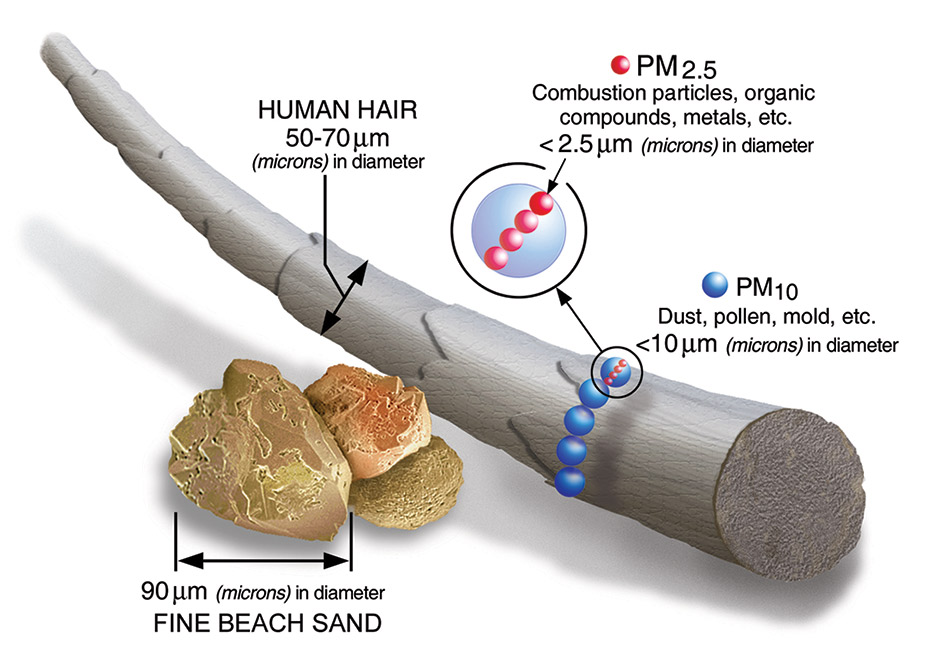
Particulate matter (PM) is composed of chemicals such as sulfates, nitrates, carbon, or mineral dusts. Vehicle and industrial emissions from fossil fuel combustion, cigarette smoke, and burning organic matter, such as wildfires, all contain PM.
How Air Pollution Affects the Lungs
The lungs are meant to filter out dangerous compounds, but when exposed to excessive levels of air pollution, this system can become overwhelmed. Pollutants can induce inflammation, oxidative stress, and damage to the sensitive tissues of the respiratory system. This harm can eventually result in cancer and other long-term respiratory disorders.
Addressing the Crisis: What Can Be Done?
The impact of air pollution on pulmonary health is a complex and multifaceted issue that requires coordinated action at the local, national, and global levels.
Policy Interventions
Governments must implement and enforce stricter air quality standards, invest in clean energy technologies, and promote sustainable transportation options. International cooperation is also essential to address transboundary air pollution and its global health impacts.
Individual Actions
On an individual level, there are steps we can all take to reduce our exposure to air pollution, such as using air purifiers at home, avoiding outdoor activities during times of high pollution, and supporting policies and initiatives that aim to improve air quality.
Research and Innovation
Continued research is needed to better understand the mechanisms by which air pollution affects pulmonary health and to develop innovative solutions to mitigate its impact. This includes studying the long-term effects of air pollution, identifying vulnerable populations, and evaluating the effectiveness of interventions.